This website uses cookies to ensure site visitors get the best experience on our website. By continuing to use this site, you accept our use of cookies and Privacy Statement. To learn more, please visit LSU Privacy Statement.
LOUIS provides a service that allows college students and faculty to borrow from member libraries.
Tile Cover
Link copied
Borrowing Books from Other Louisiana Libraries
https://lib.lsu.edu/borrowing#lalinc
Tile HTML Summary
LOUIS is a consortium of public and private college and university libraries in the state of Louisiana. It enables students and faculty of Louisiana colleges and universities to borrow materials from member libraries.
Eligibility: Each library determines its level of participation. LSU Libraries issues LOUIS Reciprocal Borrower's Cards to LSU faculty, staff, and students for use at other LOUIS institutions. It honors cards from other institutions issued to faculty, staff, and students.
TThe LSU Libraries' Access Services Department verifies that the person has current privileges. If so, prepares and mails the LOUIS Reciprocal Borrower's Card.
Present the LOUIS Reciprocal Borrower's Card at the circulation desk of the LOUIS library that they wish to use.
Each LOUIS library determines the local procedure for using the LOUIS Reciprocal Borrower's Card, so each has a unique procedure for checking out materials. Some issue a temporary checkout card, valid for the semester. Some hold the LOUIS Reciprocal Borrower's Card while reserve materials are being used Card users must abide by the policies and procedures of each participating library.
The level of LOUIS library privileges is set by individual libraries, so privileges vary from library to library. Detailed information about LOUIS privileges can be found on theLOUIS Resource Sharing information page.
If neither the site library nor the LSU Libraries owns needed material, LSU faculty, staff, and students can request it through Interlibrary loan (ILL).
Services for LSU Online holders of LOUIS Reciprocal Borrower’s Cards vary by library because each participating library has unique For the best service, please keep in mind:
When requesting assistance, always identify yourself as an LSU Online student and a LOUIS Reciprocal Borrower.
Check out materials using your LOUIS Reciprocal Borrowing card.
When Interlibrary Loan services are needed from the library, ask for directions for submitting a request. You will be required to show your LOUIS Reciprocal Borrower's Card and a picture ID. If your local LOUIS Library does not permit interlibrary loan, place your interlibrary loan request online through LSU Libraries.
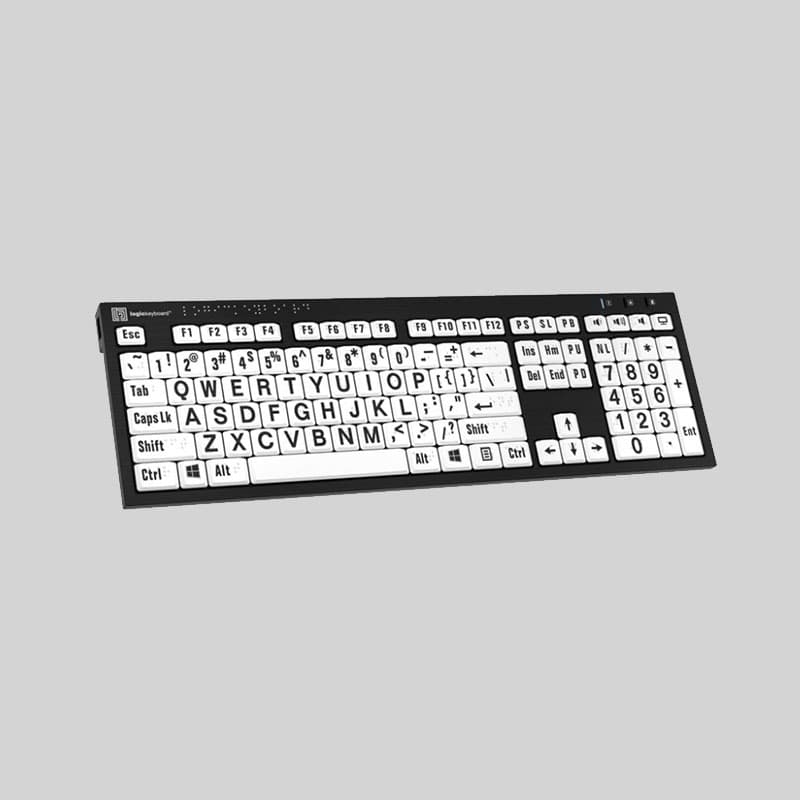
The braille and large-print PC Nero Keyboard for the visually impaired is available for use on designated accessibility machines located at the entrance of computer lab 141.
Eight-dot (six-dot in US) braille keyboard layout
No installation software required
Connection: Wired USB - cord length 5 feet / 1.5 meter
2 built-in 2.0 ports for additional desktop expansion
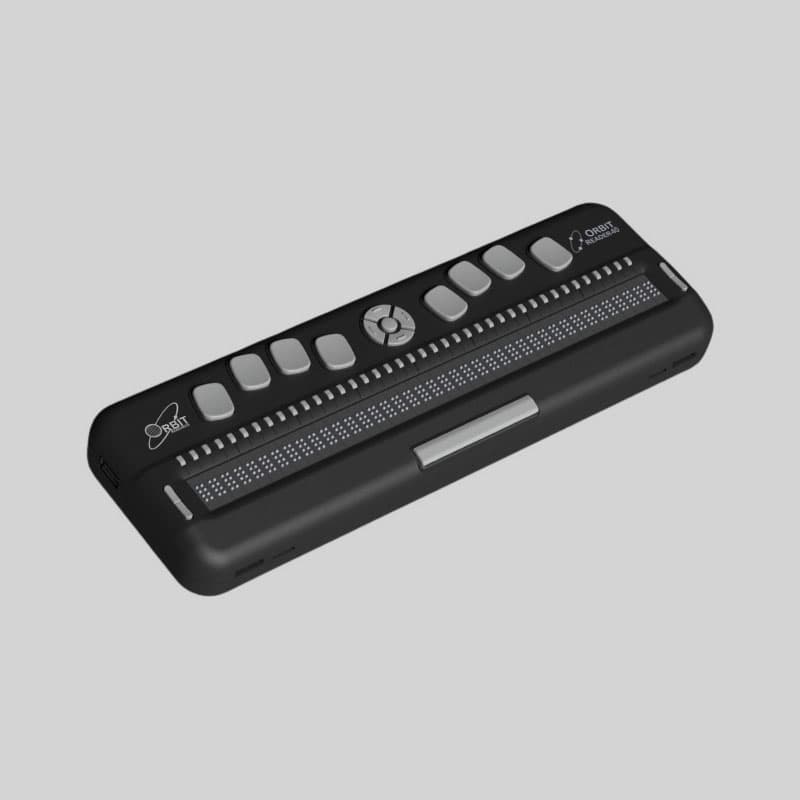
The Orbit Reader 40 is a braille display, reader and note-taker.
Unique signage-quality Braille
40 eight-dot refreshable Braille cells
Use stand-alone or connected to a computer or mobile device
Book-reader mode – read your favourite books and files from SD Card or USB Flash Drive
Note-taker mode – take notes and edit files
Braille display mode connects to 5 computers and mobile devices over USB and Bluetooth
The reader is compatible with the accessibility computer stations found at the entrance of computer lab 141. This item is available for check out at the information desk.
It depends! This is a curator-level decision and will vary for each case. All requests for access to unprocessed collections require the Williams Center director's authorization. Any duplications of unprocessed interviews are not allowed beyond "Fair Use" unless this restriction is cleared by the director upon staff review of the item. Please note that the review process may take at least 1-2 business days, depending on the size of the collection.
Answered by: Jennifer Cramer
Link copied
Can I access an "unprocessed" collection?
Category
FAQ
Tile HTML Summary
It depends! This is a curator-level decision and will vary for each case. All requests for access to unprocessed collections require the Williams Center director's authorization. Any duplications of unprocessed interviews are not allowed beyond "Fair Use" unless this restriction is cleared by the director upon staff review of the item. Please note that the review process may take at least 1-2 business days, depending on the size of the collection.
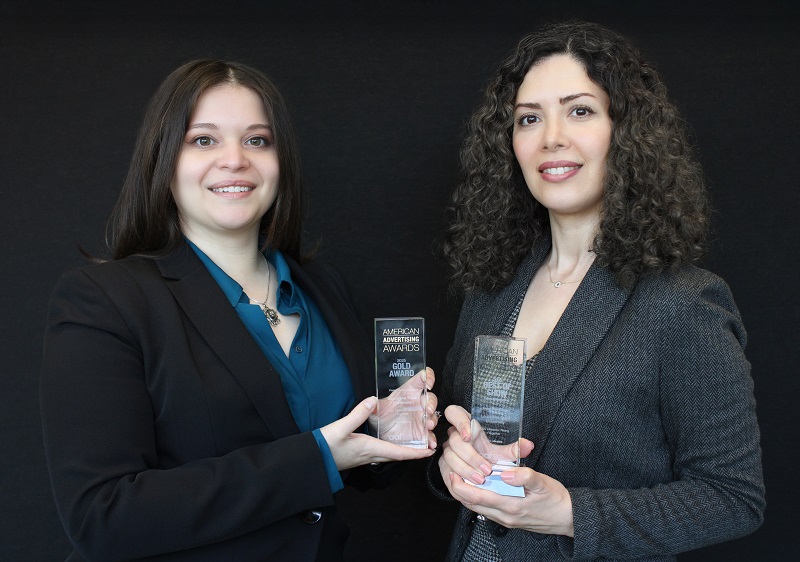
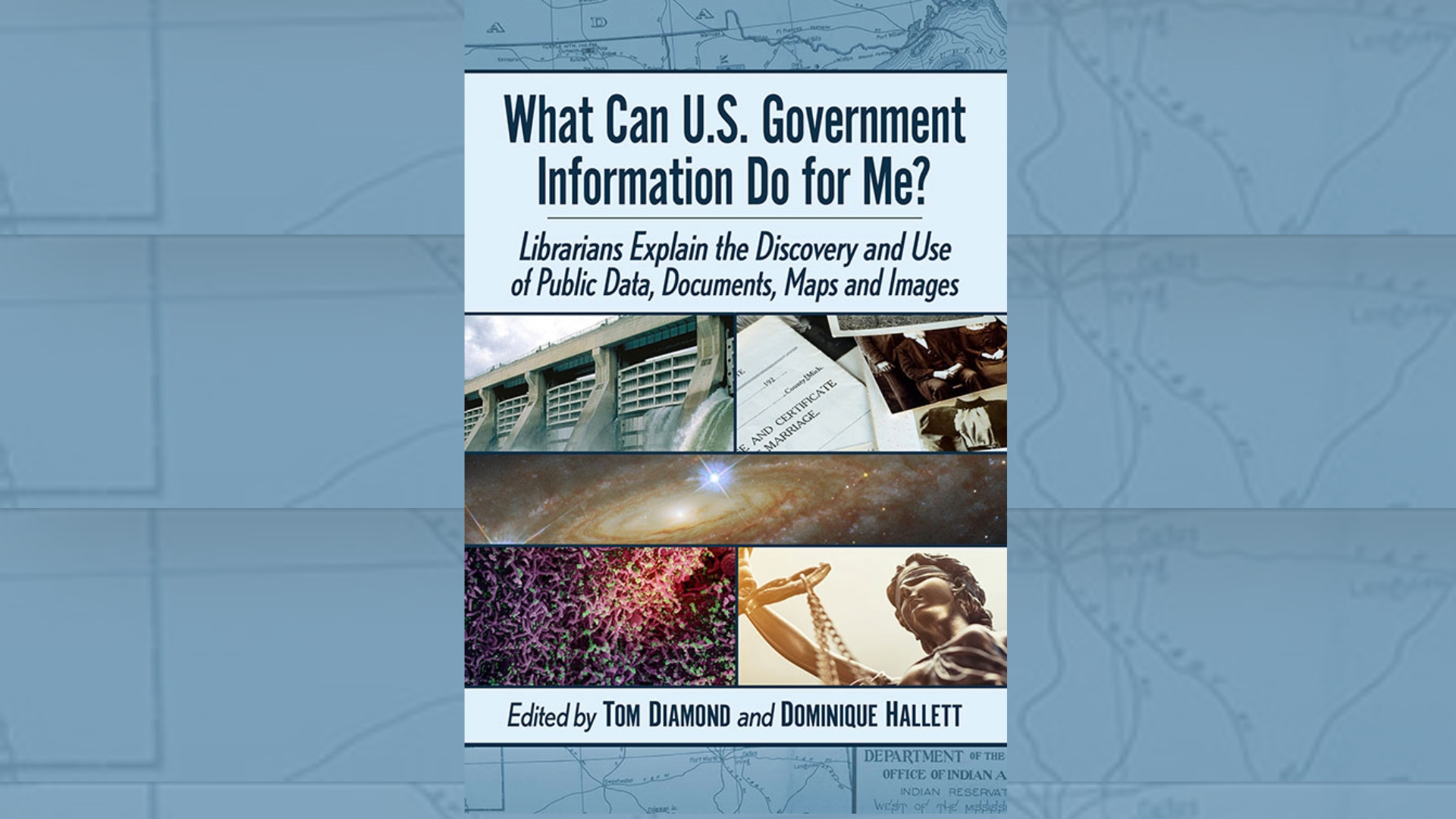
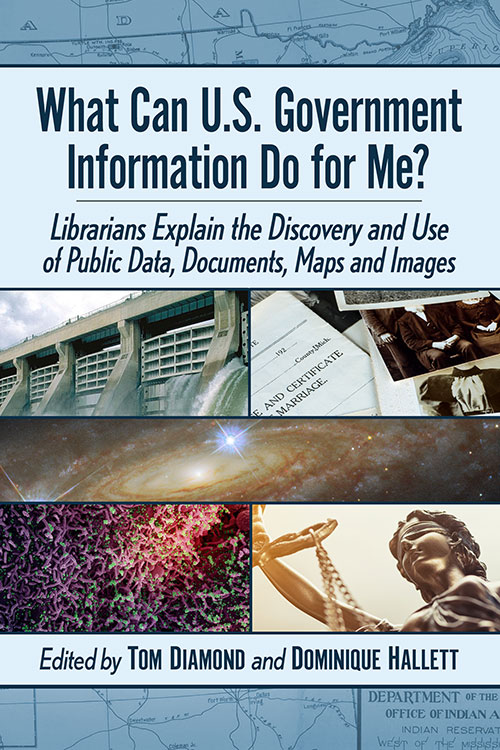
LSU Libraries is proud to celebrate the achievement of Tom Diamond, Collections and Materials Selector Librarian, and his co-editor, Dominique Hallett, whose book, What Can U.S. Government Information Do for Me?, has been awarded the prestigious Margaret T. Lane/Virginia F. Saunders Memorial Research Award. This national recognition, bestowed annually by the American Library Association's Government Documents Round Table, honors outstanding research that highlights the significance of government information in libraries and beyond.
This is the second time in recent years that an LSU Libraries faculty member has received this award. In 2019, Hayley Johnson was honored for her contribution to the book Government Information Essentials (ALA, 2018), where she authored a chapter titled "Networking and Training: Essential Tools for Collaboration and Learning."
Published by McFarland in 2023, this book expands the conversation about government documents, moving beyond traditional publications to showcase a diverse array of resources, including data sets, legal materials, and statistical reports. By doing so, it empowers librarians to better serve their communities and equips students with valuable tools for research and learning.
Government information plays an important role in academic research and public knowledge. Books like What Can U.S. Government Information Do for Me? reinforce our commitment to making these resources more accessible and meaningful for our campus and beyond.


 LSU Libraries is proud to celebrate the achievement of