From the Stacks: Gaines M. Foster
LSU Libraries celebrates the research and creativity of LSU faculty through "From the Stacks: LSU Faculty Authors," a monthly Q&A series highlighting books written by LSU faculty members. This initiative highlights recent publications and offers insight into the scholarship that shapes the university’s academic community. All faculty-authored books are included in the Libraries’ physical collection and as part of the faculty book list in the LSU Scholarly Repository.
Gaines M. Foster
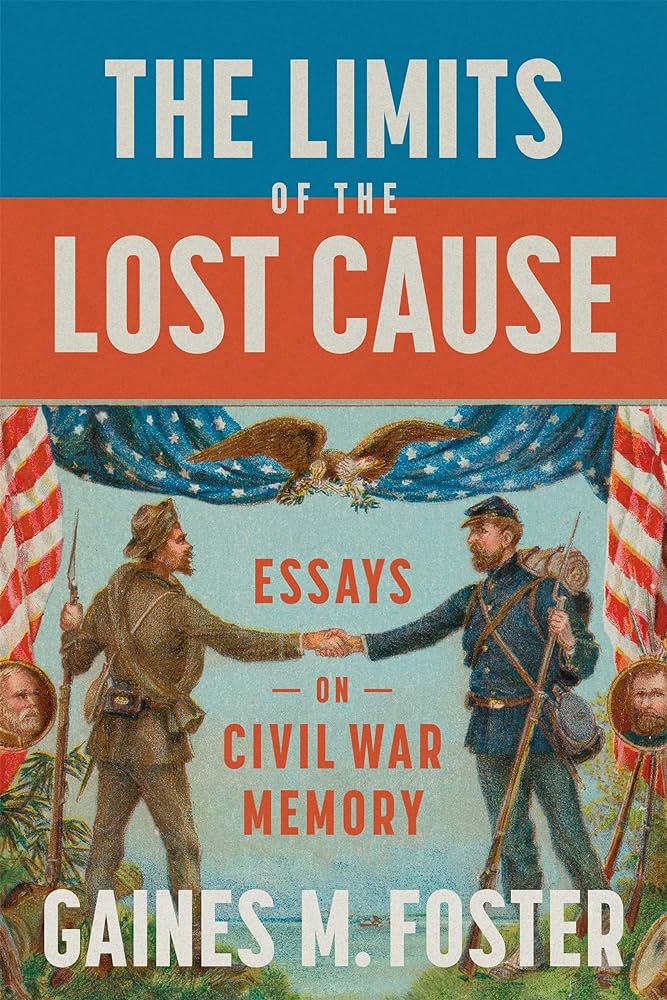
Gaines M. Foster is the Murphy J. Foster Professor of History Emeritus at Louisiana State University and author of Ghosts of the Confederacy: Defeat, the Lost Cause, and the Emergence of the New South,1865 to 1913 and The Limits of the Lost Cause: Essays on Civil War Memory. This month’s “From the Stacks,” highlights The Limits of the Lost Cause: Essays on Civil War Memory (LSU Press, 2024), a collection of essays that challenge ways of thinking about the impact the American Civil War had on the South.
What attracted you to your field of study?
I study American history. Only when I took history in college did I appreciate how important understanding the past is. I tell my students, “think of yourself as entering a room with an on-going conversation; to contribute to it intelligently, you need to know what has already been said.” I also tell them studying history is fun; it’s the greatest puzzle ever—you get to figure out how people and events fit together over time.
Tell us about your education and work history.
[I was b]orn in Louisiana, [and] I grew up in South Carolina. I went to a small liberal arts college, Wofford, and then did my graduate work at the University of North Carolina. The last three years [I was there, I taught] part-time. I then had the good fortune to be hired at LSU, where I taught for forty years, with an interruption to serve as a dean for five years.
Does writing come easily to you, or is it a struggle?
The research is great fun. Writing the initial draft is very difficult but rewriting then becomes enjoyable. That’s good since I have to do a great deal of it, helped always by friends who are excellent critics.
What drew you to the specific subject of your book, The Limits of the Lost Cause: Essays on Civil War Memory? Why was it important to write it? What do you want readers to take away from your book?
An earlier book [I wrote], Ghosts of the Confederacy, explored the white South’s response to defeat in the Civil War. In essays written about the same time, I challenged C. Vann Woodward’s argument that defeat shaped southern identity. Those essays appear in The Limits of the Lost Cause. Its other essays, all written in the last few years, challenge the idea that the white South is still fighting the Civil War. They show that the white South accepted defeat, embraced reconciliation, and even supported an expansion of federal power. They also analyze how the war got its name, the use of Robert E. Lee’s image, and disputes over flying the Confederate flag. So much of what pundits attribute to the continuing Civil War dates not to 1865 but 1965 and involves not just the white South’s but the nation’s response to the changes the Civil Rights movement and federal legislation brought.
Are you envisioning a follow-up?
I haven’t decided if we need another book on Americans’ memory of the Civil War, but I may write one.
What works do you consider essential for anyone in your field?
Readers interested in The Lost Cause might also explore works by Charles Reagan Wilson, David Blight, Caroline Janney, Gary Gallagher, and others.
Do you have any advice for students and other researchers and writers in your field who may have the need or desire to write a book?
Do the hard work of research in evidence left from the past, then use that evidence to craft a convincing argument that speaks to the present.
LSU Libraries supports faculty authors by collecting and preserving their work in the LSU Scholarly Repository and by helping make LSU research more widely discoverable through open-access initiatives.