Changes in Extension Over 60 Years
Denver Loupe
Denver Loupe
Denver Loupe: It started out that you plowed behind a mule.
You had a plow-you followed a mule or two, whichever the case may be
. . . you did all the work which was manual at the time. Even my
sugarcane which I remember just briefly, it was all manual. You cut
it manually, you loaded it onto a cart, the mules drove the cart to
the, what we call the derrick which was a lift that put the chain
that held the cane into a truck, it went to the sugar mill and was
processed there. So it was all manual.
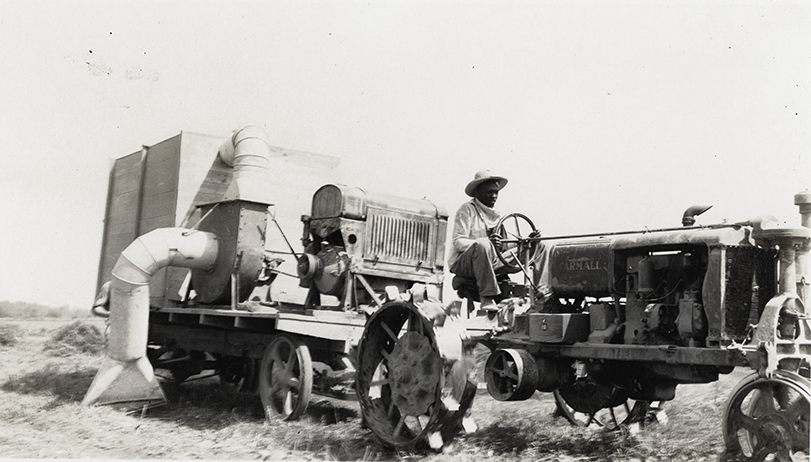
During the war, World War II, there was a lot of changes that came
about during the war and immediately following the war. For
instance, we were still cutting cane by hand during World Wwar II
and only toward the end of the war that we mechanized. And we had
mechanical harvesters that went in and cut the cane and laid it on
the road and then you had to grab it, pick it up and put it in the
carts, tractors, and it went onto the mill that way. The hand didn't
touch it then. Now you have, just using that example, you have what
they call combine harvesters which chops the cane now and blows it
into a cart; goes to the mill and comes right into the conveyor
belts into the mill.
I mean, the educational background of the farmers just increased
dramatically, particularly at the college level. First step, then
later on even at the master's level and then very few, but some, at
the PhD level that are actually managing farms.Then that brought in
. . . the technical development brought in a lot of consultant type
work. And most of them that I know have PhDs in either soil science
or entomology or some technical work. And the farmers have increased
their capabilities.
Wyatt Winnie: What about other things, like mechanical
technological changes or even telephones? Did those things change
throughout the years?
Loupe: Oh completely.
Winnie: Anything notable that stands out in your mind?
Loupe: Well number one, telephones. I couldn't pick up my
phone here and make a call when I first came to Baton Rouge into the
state office. I had to get a signed receipt from my supervisor that
it was alright for me to call a county agent in x parish.