The City of the Belle Créole
By the end of the Nineteenth Century, the French language in New Orleans was a rapidly fading vestige of the city’s past. The French-speaking, or Francophone, residents of New Orleans saw the importance of their language and culture decline as the city became largely English-speaking and American in character. In 1886, Judge F.P. Poché gave a speech for “Creole Day†at the “American Expositionâ€. This text describes the many achievements of the city’s “Creole†people and highlights their role in the city’s history. Poché’s speech, given in English and only later translated into French, asserted that the Creoles of New Orleans were the white descendants of European settlers who brought the “light of civilization†to Louisiana. This assumption about the identity of the Creoles is related to the widely used figure of “La Belle Créole.†Whether the name of a tobacco factory, a polka, or a steamboat, the emblematic “Belle Créole†originated in a romanticized and exclusionary representation of Francophone New Orleans. This recurring image points to what historian Joseph Tregle calls a “creole mythology,†a rigid group identity built on glorified cultural and political achievements of the past. This exhibition looks at the music and literature of Nineteenth Century Creole New Orleans in an effort to understand how the many Francophone voices of the city represented themselves and their place in history. Employing the mythic figure of the “Belle Créole†was but one of the many conflicting ways that Francophone New Orleans used music and literature to create, defend, and contest various group identities.
See: Joseph G. Tregle, Jr. “Creoles and Americans†in Creole New Orleans: Race and Americanization. ed: Arnold R. Hirsch and Joseph Logsdon. (Baton Rouge: LSU Press, 1992).
Case 1 Gallery:
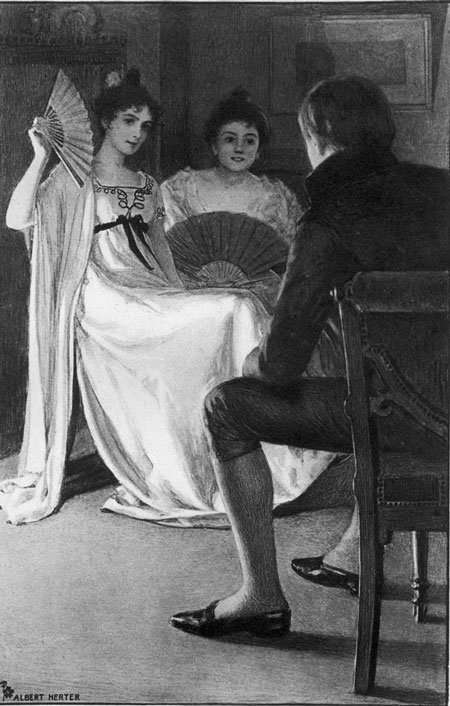
![Engraving. Creole ladies with fans in The Grandissimes. George Washington Cable. (New York: C. Scribner’s sons, 1899). [Hill Louisiana PS 1244 G6 1899].](/sites/all/files/sc/exhibitions/e-exhibits/creole/case1/large/cable_creole_ladies.jpg)
[Hill Louisiana PS 1244 G6 1899].
![Photo Etching. "La Belle Creole Cigar and Tabacco Factory" in Groenevelt, Carl E. New Orleans Illustrated in Photo Etching (New Orleans: F.F. Hansell and Bro, 1892.) [Hill Louisiana F379. N543 G76].](/sites/all/files/sc/exhibitions/e-exhibits/creole/case1/large/creole_cigar.jpg)
[Hill Louisiana F379. N543 G76].
![Engraving. Map Of Louisiana. in G. W. Cable, "Who are the Creoles?" Century Magazine, Vol. XXV, 1882-3. [Hill Rare 051 C33]](/sites/all/files/sc/exhibitions/e-exhibits/creole/case1/large/francomap.jpg)
[Hill Rare 051 C33]
![Sheet Music. "La Belle Créole. Polka de Salon" by H. E. Lehmann. (New Orleans, H.E. Lehmann, nd.) in Music Collection of New Orleans Imprints. [Hill Louisiana Rare Oversize M1. M86 Box 3 No.33]](/sites/all/files/sc/exhibitions/e-exhibits/creole/case1/large/lehmann.jpg)
[Hill Louisiana Rare Oversize M1. M86 Box 3 No.33]
![Pamphlet. Discours de l’Honorable F.P. Poché...Sur Les Créoles de la Louisiane prononcé le 7 Février, 1886, jour des Créoles à l'exposition Américaine...Traduction de l'anglais. Félix Pierre Poché. (New Orleans: Imprimerie du Croissant, 1886). [Hill Louisiana F380 C9 P63]](/sites/all/files/sc/exhibitions/e-exhibits/creole/case1/large/poche.jpg)
[Hill Louisiana F380 C9 P63]