Welcome to LSU Libraries
News & Notes
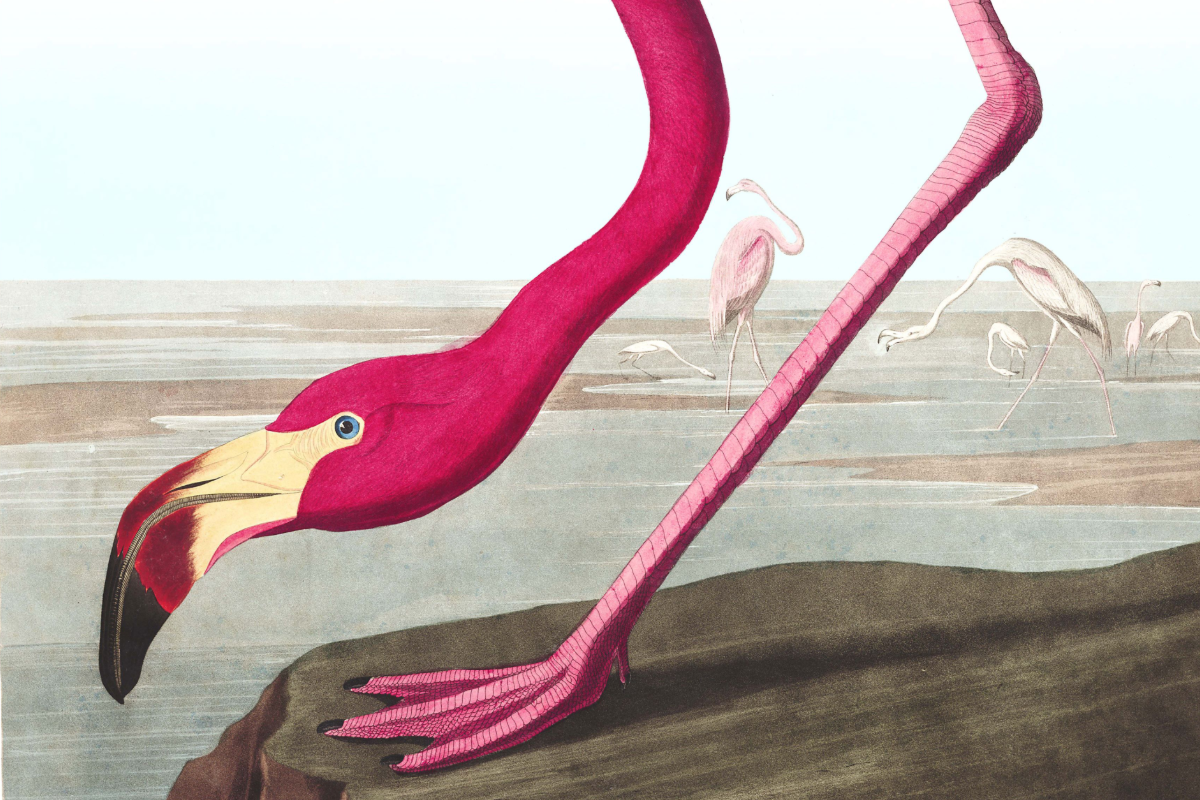
illustration of a flamingo
LSU Libraries Special Collections Hosts 2025 Audubon Day

illustration of a flamingo reads Audubon Day, Saturday, May 3, 10 a.m. to 2 p.m., Hill Memorial Library

For its annual Audubon Day, LSU Libraries will host a viewing of the famed double elephant folio edition of John James Audubon’s Birds of America (London, 1827-1838) on Saturday, May 3, 2025, in Hill Memorial Library on LSU’s main campus. Audubon was an artist, naturalist, and ornithologist. His illustrated compendium of the birds in the United States, Birds of America, is considered one of the finest ornithological works ever completed.

In addition to the viewing, there will be an exhibition of related materials from the E.A. McIlhenny Natural History Collection. Representatives from the LSU Museum of Natural Science will be available to answer ornithological questions, and museum curators will offer special tours of the museum and its world-class specimen collections.

New this year, the T. Harry Williams Center for Oral History will be facilitating participation in "LSU Listens," inviting visitors to share brief stories about their experiences with Birds of America, art, ornithology, natural science, LSU Vet Med’s resident raptors, and Special Collections. Participants will receive copies of their interviews.

LSU printmaking students will also have a station where they will demonstrate the printmaking process from start to finish, featuring examples from the LSU print archive. Additionally, members of LSU Vet Med’s Raptor Rehab program will return with rescued raptors, accompanied by informational tables from local nature organizations. A coloring station will be available for younger visitors to enjoy.

Audubon Day offers a unique opportunity to engage with LSU’s rich natural history collections and learn from experts across multiple disciplines. We look forward to seeing you there!

The event is free, but a timed reservation is required to view the folios. For more information and to register, visit lib.lsu.edu/special/audubon


Audubon Day 2025


*Members of the media should contact Christine Wendling, christinew@lsu.edu, to reserve a slot for this event. 

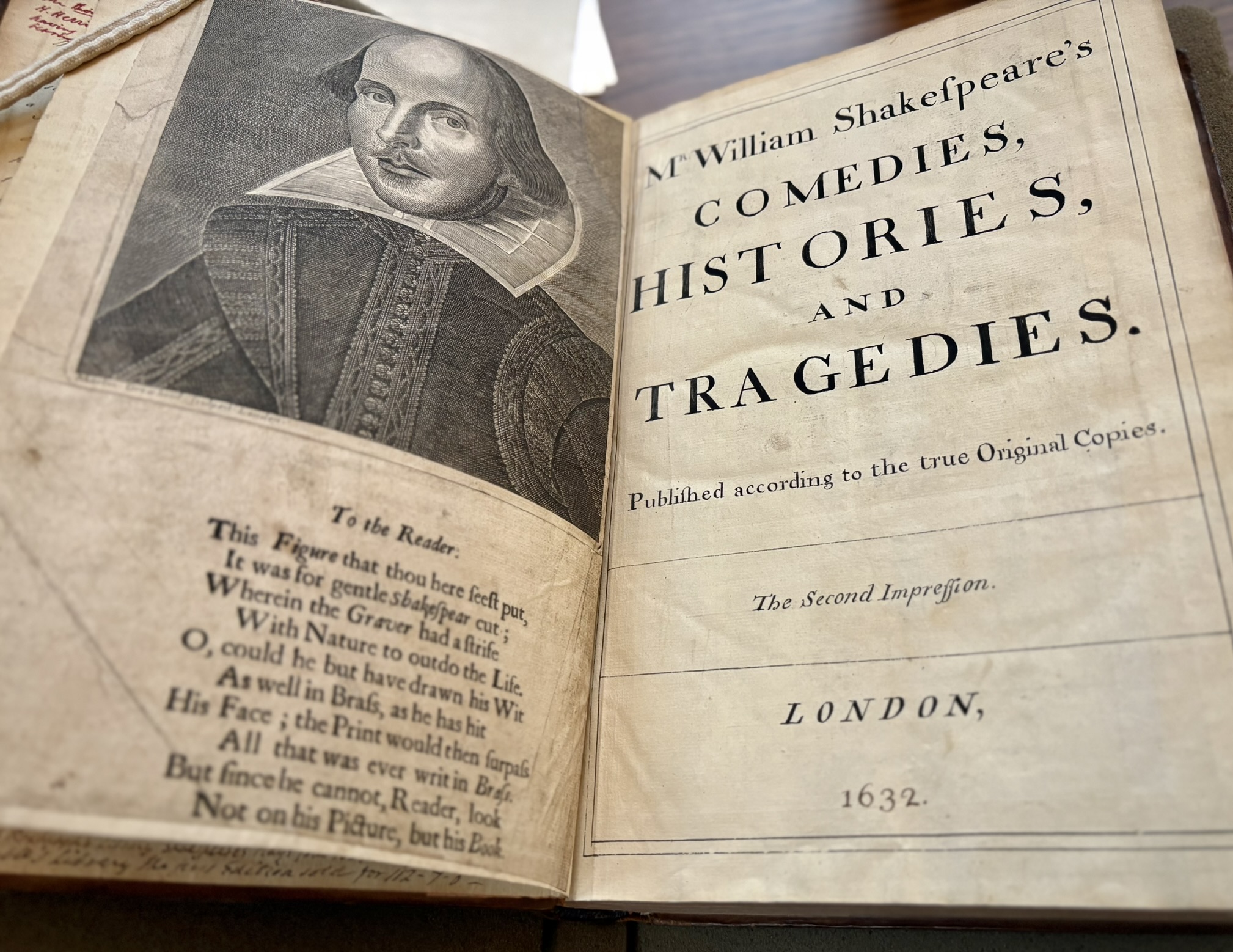
An old book lies open on a table. An images of William Shakespeare is on the left page. On the right, the title reads "William Shakespeare's Comedies, Histories, and Tragedies."
LSU Libraries Acquires Rare Second Folio and Civil War Eyewitness Letters

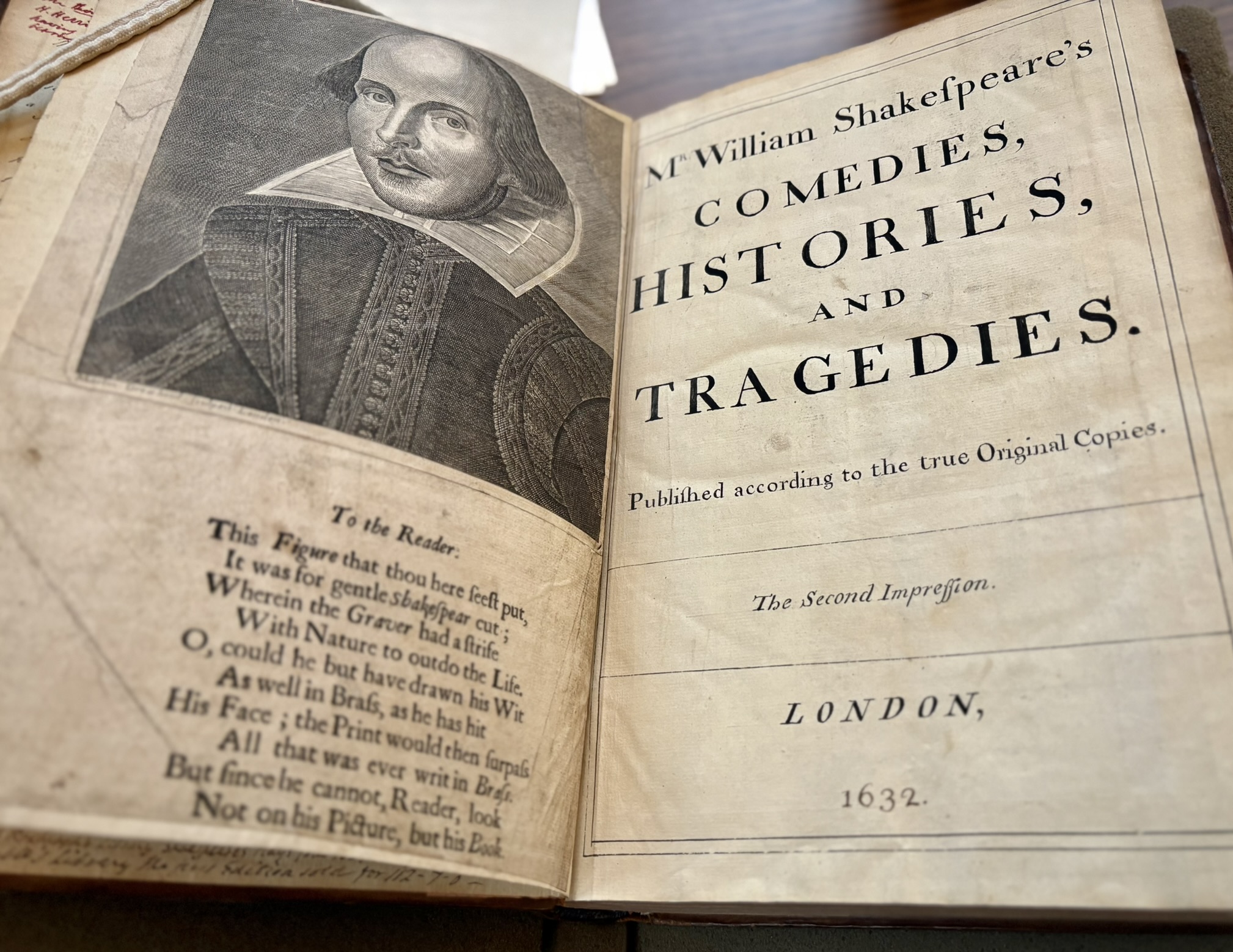
An old book lies open on a table. An images of William Shakespeare is on the left page. On the right, the title reads "William Shakespeare's Comedies, Histories, and Tragedies.”
The frontispiece and title page of the Rufford-Purton copy of the Second Folio. However, neither the frontispiece nor the title page included in this copy are actually from the second folio but are instead supplied from other sources. The famous frontispiece portrait of Shakespeare by Martin Droeshout has been added from the later fourth folio (1685), and the title page is a later, handwritten facsimile, presumably from the late eighteenth century.

LSU Libraries is proud to announce two significant additions to its Special Collections: the “Rufford-Purton” copy of William Shakespeare’s Second Folio and a set of Civil War-era letters describing the capture of Jefferson Davis, in which eyewitnesses claim he was disguised in women’s clothing. These remarkable acquisitions align with LSU’s collecting strengths and will provide scholars and students with valuable opportunities for research and learning for years to come. 

“As a collector, I’m fascinated with finding rare historical documents and preserving them, so they don't end up lost. Now, I'm at a point where I'd like to share them so they can be studied,” said Jeffery M. Leving, the renowned rare book and manuscript collector who donated the items. “This gift stems from my professional relationship with LSU’s Dean of Libraries, Stanley Wilder. Dean Wilder is a close friend, and I have full confidence that LSU will preserve these documents for future generations while ensuring that students and faculty benefit from their presence. LSU is the ideal institution to make that possible.” 

a page of a book
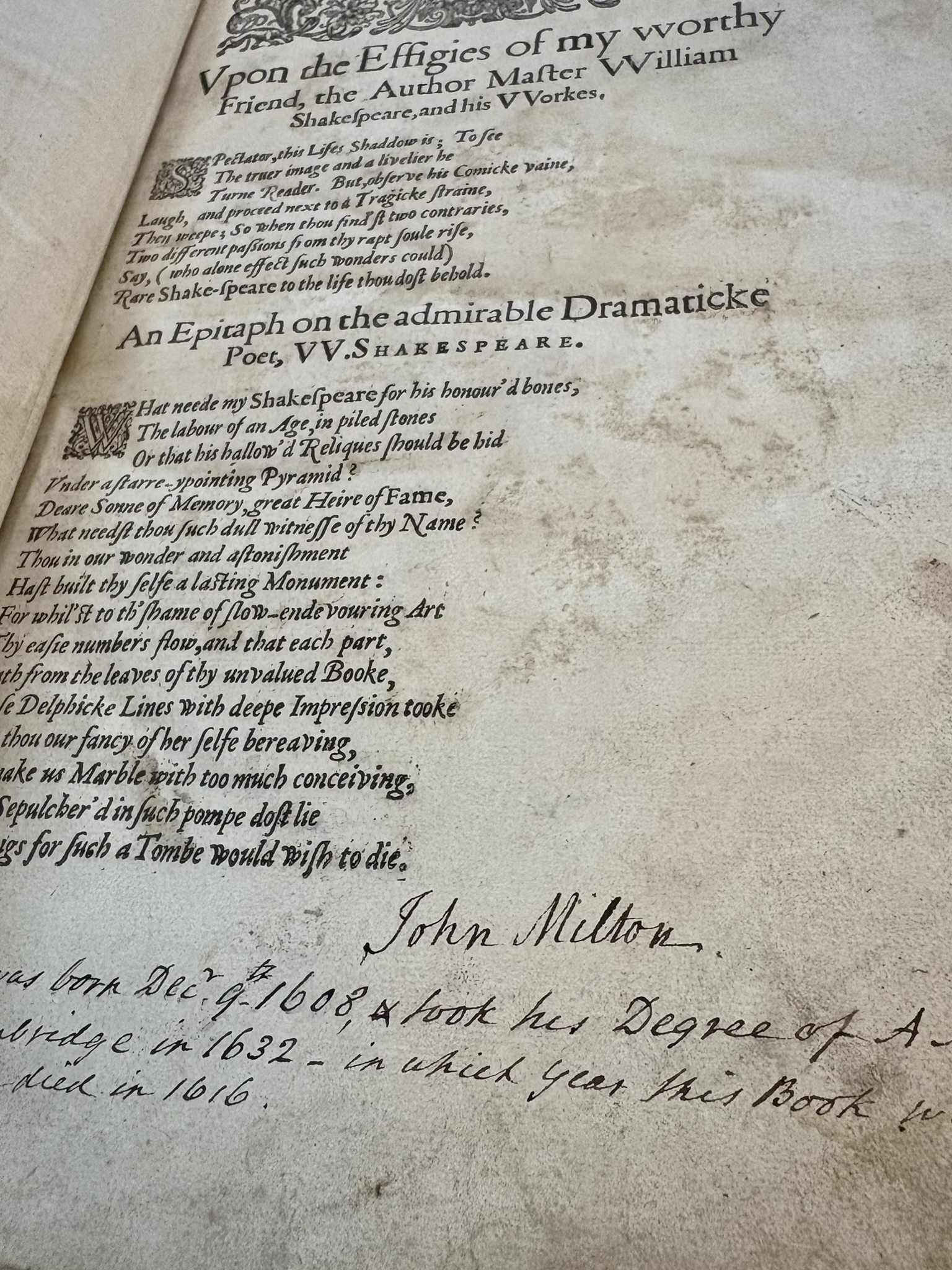
John Milton's first published poem, which makes up part of the prefatory material of the Second Folio. It is annotated here in what appears to be an eighteenth-century hand, possibly Reverend Rufford's. 

Shakespeare’s Second Folio is among the most coveted and studied books in the world of literature. The First Folio, published in 1623, preserved many of Shakespeare’s plays that might have been lost otherwise. Originally published in 1632, the Second Folio is a critical edition of Shakespeare’s collected plays. There were almost 1,700 changes introduced into the Second Folio, mostly minor corrections to the text or modernizations of language that was then almost 40 years old. Significantly, the Second Folio includes an anonymous dedication to Shakespeare attributed to then-young poet John Milton. Thirty years later, Milton would secure his reputation as one of the most important British poets of the early modern period with his publication of the epic poem Paradise Lost (1667). 

The “Rufford-Purton” copy of Shakespeare’s Second Folio is particularly distinguished by its unique provenance and marginalia, featuring manuscript notes by 18th-century rector Francis Rufford, as well as additional annotations and documents tracing its ownership through the Purton family. Its journey includes time at the Shakespeare Birthplace Trust in Stratford-upon-Avon before re-entering private hands, and is now in its final resting place, LSU’s Hill Memorial Library.  

Leving also contributed a historically significant collection of letters and statements related to the capture of Confederate President Jefferson Davis on May 10, 1865, near Irwinville, Georgia. These documents were gathered and preserved by Robert Burns (ca. 1832–1899), a lieutenant colonel of Company C, 4th Michigan Cavalry. Burns himself was not an eyewitness to Davis’ capture, but he was stationed nearby and later collected first-hand accounts from the soldiers who were eyewitnesses to the event.  

These accounts of Davis' dramatic capture include descriptions of his attempted disguise. According to multiple eyewitness statements, Davis was discovered wearing what appeared to be women’s clothing, a fact that became a source of both controversy and satire in the following years. These materials provide valuable insight into how historical narratives are shaped and remembered, offering researchers a deeper understanding of the political and cultural climate of the time. 

Taken together, the newly acquired folio and the Burns collection offer a unique juxtaposition of literary and historical artifacts, demonstrating the breadth and depth of LSU’s Special Collections. Scholars in literature, history, and archival studies will find these acquisitions invaluable for their research and educational endeavors forever after. 


Both the Second Folio and the collection of Civil War documents are being cataloged and will soon be available to students and researchers alike. Please contact us to make an appointment or to hear more about how these resources fit into our larger collections.    

An old book lies open on a table. The right page reads "The Tempest" at the top.
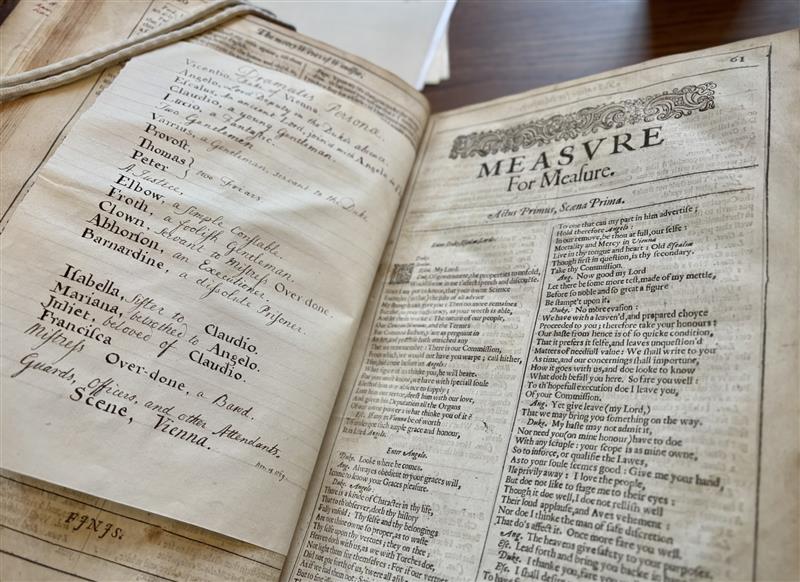
The text of “Measure for Measure” is accompanied by a tipped-in, handwritten guide to the play's characters.
An old book lies open on a table. The right page reads "The Tempest" at the top.
A list of the plays included in the Second Folio, across from the opening page of “The Tempest.” The marginal annotation on the right corrects 'firrs' to 'furze' (a family of shrubbery often found on islands in the Atlantic Ocean).
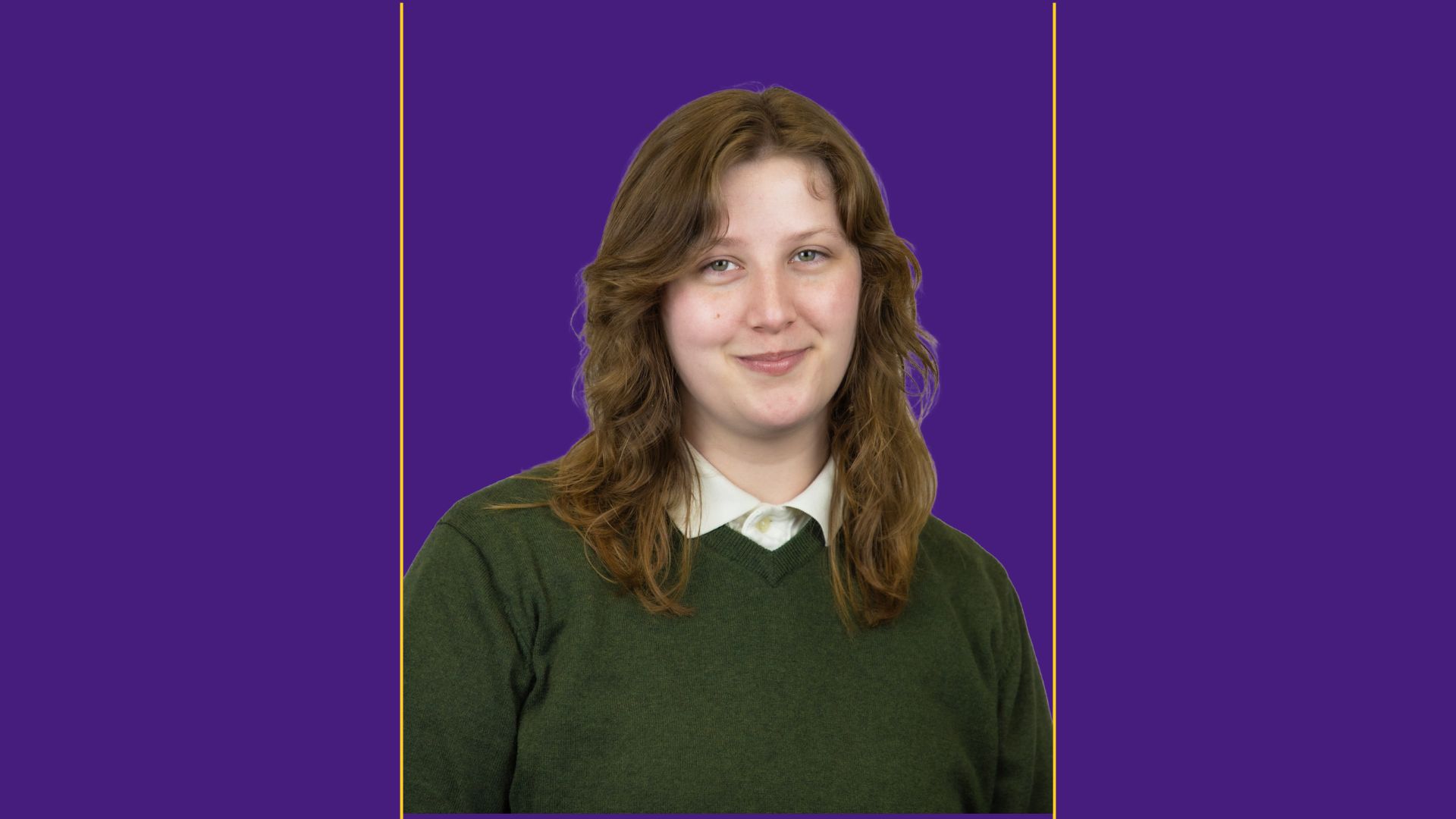
Lili Bedoya
#SubjectLibrarianSaturday: Lili Bedoya

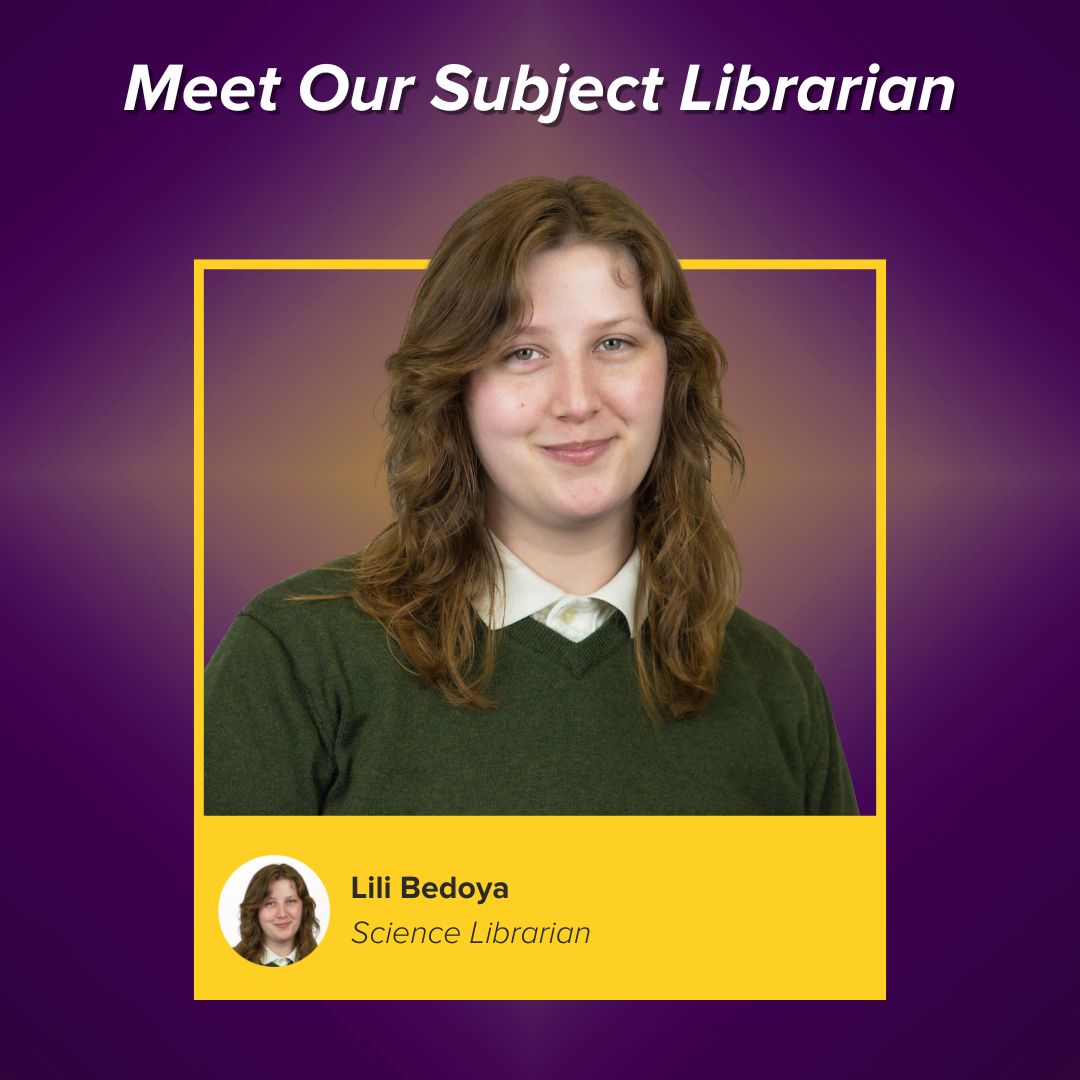
Meet Our Subject Librarian: Lili Bedoya, Science Librarian#SubjectLibrarianSaturday is a social media and blog series highlighting LSU Libraries’ subject librarians, whose job is to help students and faculty with their research at any stage.

Lili Bedoya is LSU Libraries’ Science Librarian. The responses below have been edited for length and clarity.


How do you approach research consultations to ensure patrons feel comfortable and supported? 

I approach my research consultations as a friendly collaboration because I am always learning new things from patrons. I am honest about how I will never know everything or be able to find the most perfect resources for every single project, but I make sure to explain that I will continue to exhaust every option available until I can offer a solution.

What do you enjoy most about helping patrons with their research and information needs?  

My favorite thing about helping patrons is demystifying the research process while helping them gain confidence in their research and ideas! Since I love learning new things, each consultation I get is a new excuse to do deep dives into new research topics.

Outside of your work as a librarian, what are some of your interests or hobbies?   

My main hobbies are reading books, listening to all kinds of music, and playing video games. At home I have two cats, a crested gecko, and an excessive number of plants that I care for.

How do you stay current with developments and trends in your field to better assist patrons with their research needs?

My current method for staying on top of recent trends and developments in the field is perusing the latest issues of relevant scientific journals. In the future, I plan to attend the seminars and other events that go on in CC&E, as well as the LSU Science Cafes.


Contact a subject librarian to book a research consultation and become familiar with the most frequently used library databases and information sources in your specific area of study.

expand
Tile Cover
People troubleshooting on a computer
Ask Us
Service
Tile Short Summary
Check our FAQs, submit a question using our form, or launch the chat widget to find help.