From the Stacks: Tim Slack
LSU Libraries celebrates the research and creativity of LSU faculty through "From the Stacks: LSU Faculty Authors," a monthly Q&A series highlighting recent books written by LSU faculty members. This initiative highlights recent publications, offering insight into the scholarship that shapes the university’s academic community. All faculty-authored books are included in the Libraries’ physical collection and as part of the faculty book list in the LSU Scholarly Repository.
Tim Slack
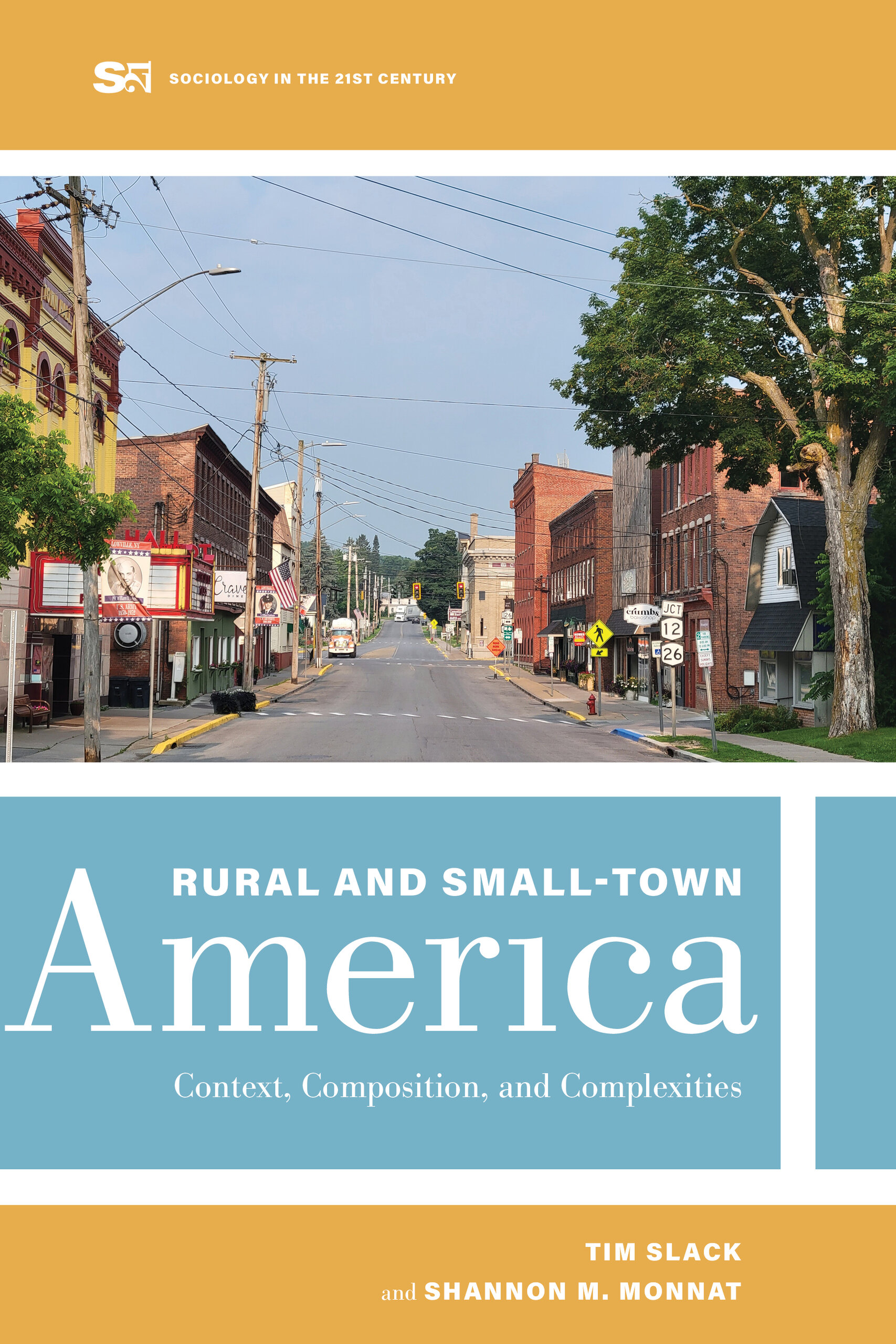
Tim Slack is an LSU professor of sociology whose research focuses on social stratification, social demography, and rural sociology, with particular attention to how space and place shape inequality. Below, he discusses Rural and Small-Town America: Context, Composition, and Complexities (University of California Press, 2024), which he co-authored with Shannon M. Monnat. Drawing on extensive empirical research, the book offers a nuanced portrait of rural America, examining social, economic, and demographic change while challenging common myths and highlighting both the opportunities and persistent inequities facing rural communities today.
Tell us about yourself.
I study social issues related to wellbeing and demography, often with special attention to comparative differences between rural and urban areas. I received my bachelor’s degree from the University of Wisconsin-Madison and my master’s degree and PhD from Penn State. I have been on the faculty in the LSU Department of Sociology since 2004.
Does writing come easily to you, or is it a struggle?
It depends on the day. The biggest struggle for me is not the writing process itself, it is getting the uninterrupted time that writing requires.
What drew you to the specific subject of your book?
I grew up in a rural community and that formative experience had a significant impact on me. American society, the mass media, and the discipline of sociology are disproportionately urban centric. I wanted to write a book on social change in rural America that presented social scientific data in an accessible way to confront myths and misunderstandings about rural people and places.
Writing is part inspirational and part mechanical. Do you have a writing routine? How long did it take to research/write your book?
For me, it is mostly a question of momentum. If I’m starting the process from a dead stop, it can take a long time to build speed. I do my best to write regularly so that I can go with the flow. It took several years of thinking about the topic and settling on a prospectus we and our publisher both liked. But once the plan was settled the writing moved quickly—about a year.
Are you envisioning a follow-up?
I mostly write articles. This was my first book. It’s a different kind of writing, and I really enjoyed it. I don’t have specific plans for a follow up. But since the book is on social, demographic, and economic change—and change never stops—I could see an update. Stay tuned!
What works do you consider essential for anyone in your field?
Every ten years the Rural Sociological Society publishes an edited volume with chapters contributed by experts on a range of rural sociological issues. That is essential. Mil Duncan’s World’s Apart: Poverty and Politics in Rural America really gripped me as a budding sociologist. I also recommend the fiction of Richard Russo; he’s a rural sociologist of sorts.
Do you have any advice for others in your field who may have the need or desire to write a book?
Write. It’s the only way to do it.
LSU Libraries supports faculty authors by collecting and preserving their work in the LSU Scholarly Repository and by helping make LSU research more widely discoverable through open-access initiatives.